Small batch · Vashon Island, Washington
Coffee worth paying attention to.
A working notebook from a small roastery in Puget Sound: the origins we're pouring, the roast curves behind them, and the methods that do them justice. No loyalty program. No pop-ups. Just the craft, written down.
On the roster
What we're roasting
Each one is a single lot from a single producer, traceable to the farm and roasted to show what that particular place tastes like.
Sharqi Haraz Washed
Washed
Not yet roastedRwenzori Mountains Honey
Honey
MediumCircasia Galaxy Hops Mossto Gesha
Gesha · Double carbonic + Galaxy hop mossto fermented honey
LightThe chain
Three places it can go right
A great cup is three decisions stacked on top of each other. Get one wrong and the other two can't rescue it.
Where it grew
Altitude, variety, and processing set the ceiling before anyone touches a roaster. Washed Ethiopian and a carbonic-macerated Gesha are not the same raw material, and shouldn't be treated like it.
How it developed
Drying, Maillard, development. Three phases and the ratios between them. We log every batch and publish the curves, including the ones that taught us something the hard way.
How you pulled it
Ratio, grind, temperature, time. Four variables, and only one of them usually needs changing. Full reference tables and a troubleshooting guide that names the actual cause.
Transparency
We publish the roast curves
Most roasters describe a coffee as "medium" and leave it there. That word carries almost no information. A curve does: when the bean turned yellow, where first crack landed, how long development ran afterward, and what the rate of rise did through the middle.
Across 80 logged batches, first crack lands at a median of 390 °F (199 °C) and development runs about 20% of total roast time. If you roast, that's something you can argue with.
Read the roasting notes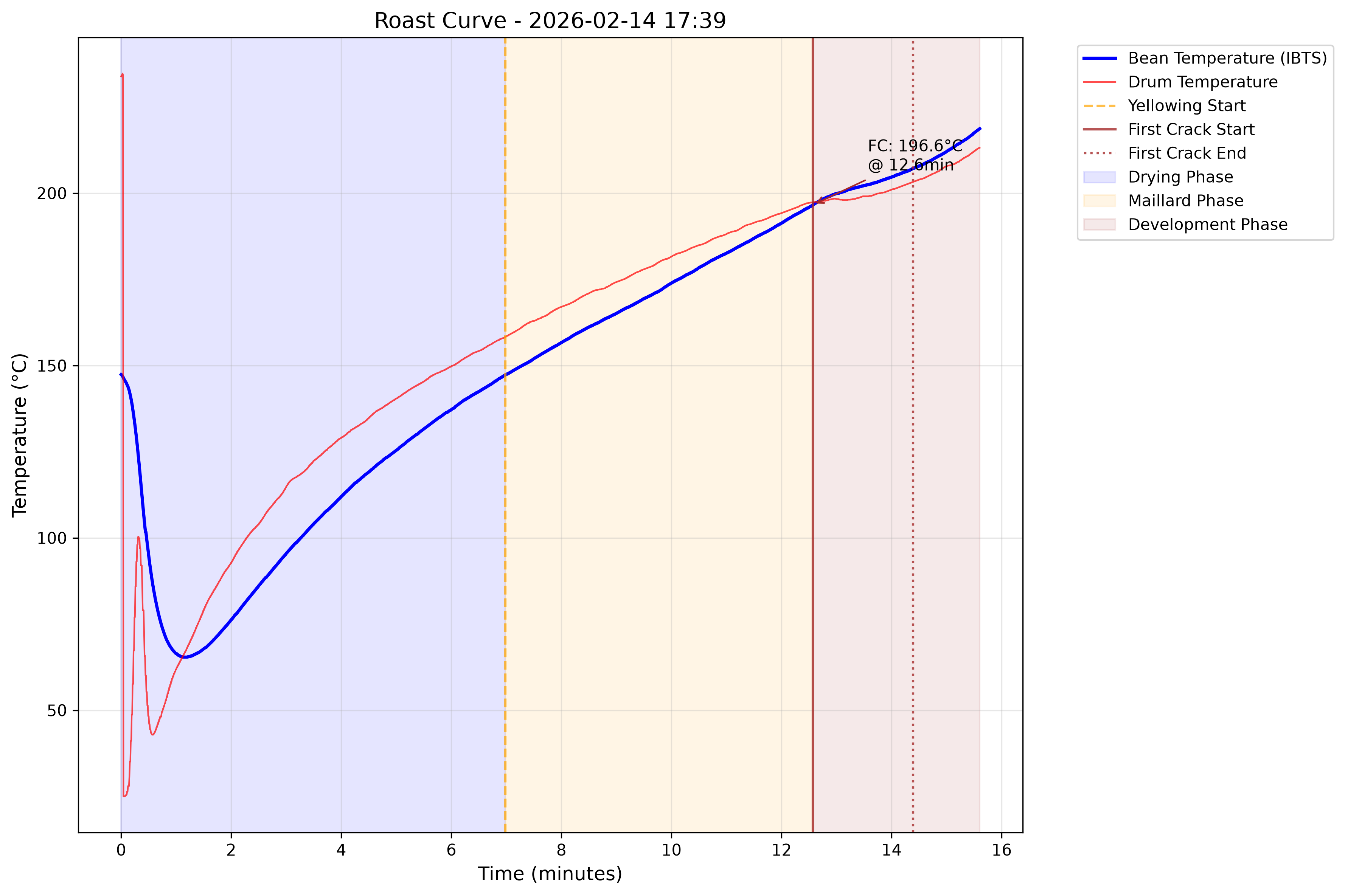
Journal
Recently written down
A Washed Yemen Landed
Two boxes came off the Royal spot list this week. One is a honey-processed Uganda from the Rwenzori range. The other is a washed Yemen from the Sharqi Haraz Cooperative, and that one is the …
A Darker Roast, On Purpose
Almost everything on our roster is roasted light to medium, because that’s what keeps origin character in the cup. So this is the exception, and it’s worth writing up because it …
Understanding Coffee Roast Phases
A walk through the roasting process using actual logged curves, phase by phase, from drying to development.
Roasting on Vashon Island
What running a roastery on an island near Seattle changes about the work, from ferry logistics to how long we spend on a profile.
If you want to drink some. We roast to order and sell through our Etsy shop, which handles the boring parts. That's the whole sales pitch. The rest of this site is here because the coffee is interesting, not because we want your email address.